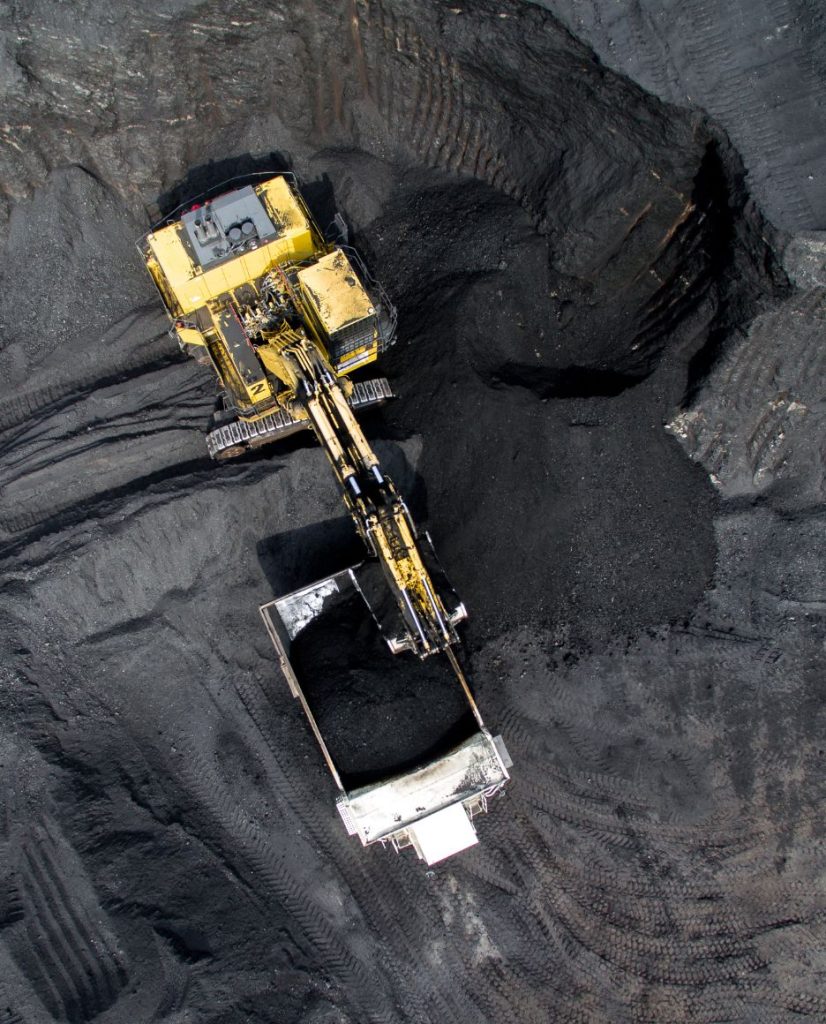

The global crude oil market remains a nexus of geopolitical tensions, supply-demand dynamics, and macroeconomic shifts, making price prediction a complex endeavor. As of May 2026, the market is grappling with the aftermath of significant disruptions, with future trajectories subject to a myriad of influential factors. This article provides an in-depth analysis of current crude oil price forecasts, key drivers, and the underlying uncertainties shaping the global energy landscape.
Current Market Snapshot and Recent Volatility
In May 2026, Brent crude oil spot prices are hovering around $106 per barrel (b) . This figure reflects a market still sensitive to supply shocks, particularly following a de facto closure of the Strait of Hormuz in April and early May 2026. This critical maritime chokepoint disruption led to a sharp spike in prices, with Brent reaching a high of $138/b on April 7 . Such volatility underscores the market’s vulnerability to geopolitical events and its immediate impact on global supply chains.
Diverse Forecasts for 2026 and Beyond
Energy market analysts and institutions offer varying outlooks for crude oil prices, reflecting different interpretations of ongoing trends and potential future events.
U.S. Energy Information Administration (EIA) Outlook
The EIA’s Short-Term Energy Outlook (STEO) for May 2026 projects a gradual easing of prices as supply disruptions are resolved and production recovers. The EIA anticipates Brent prices to remain around $106/b in May and June, subsequently dropping to an average of $89/b by the fourth quarter of 2026, and further to $79/b in 2027 . This forecast is predicated on the assumption that Middle Eastern oil production will rise, leading to a replenishment of global oil inventories.
J.P. Morgan Global Research Outlook
In contrast, J.P. Morgan Global Research presents a more bearish long-term view, forecasting Brent crude to average around $60/bbl in 2026 . This outlook is primarily driven by what J.P. Morgan identifies as “soft supply-demand fundamentals,” suggesting that global oil supply is set to outpace demand, even with a projected expansion of world oil demand by 0.9 million barrels per day (mbd) in 2026 .
“Oil surplus was visible in January data and is likely to persist,” said Natasha Kaneva, head of Global Commodities Strategy at J.P. Morgan. “Looking ahead, our balances continue to project sizable surpluses later this year, suggesting that voluntary and involuntary production cuts will be needed to prevent excessive inventory accumulation. This would help stabilize Brent prices at around $60/bbl.”
Table 1: Crude Oil Price Forecasts (Brent, $/barrel)
| Source | May/June 2026 | 4Q 2026 | 2026 Average | 2027 Average |
| EIA | $106 | $89 | $95 | $79 |
| J.P. Morgan | N/A | N/A | $60 | N/A |
Key Factors Influencing Oil Prices
Several critical factors are currently shaping, and will continue to shape, the trajectory of global crude oil prices:
•Geopolitical Risks: The recent events in the Strait of Hormuz vividly illustrate the profound impact of geopolitical instability on oil markets. Ongoing tensions in the Middle East, as well as other potential flashpoints globally, remain a significant wild card that can trigger sudden supply disruptions and price spikes .
•OPEC+ Dynamics: The cohesion and production decisions of the OPEC+ alliance are paramount. The recent departure of the UAE from OPEC, effective May 1, 2026, introduces a new element of uncertainty regarding future production quotas and spare capacity . The EIA now expects OPEC’s spare capacity to average 2.5 mbd in 2027, a reduction from previous forecasts, which could limit the cartel’s ability to respond to supply shortages .
•Global Economic Growth: The pace of global economic recovery and growth directly influences oil demand. While the IMF projects the world economy to grow at 3.2% in both 2024 and 2025, any significant slowdown could dampen demand and exert downward pressure on prices .
•Supply-Side Factors: Non-OPEC supply, particularly from the United States, plays a crucial role. The EIA forecasts U.S. crude oil production to reach 13.6 mbd in 2026 and 14.1 mbd in 2027, contributing to global supply . Technological advancements and investment in new production capacities will also be key.
•Inventory Levels: Global oil inventory levels are a critical indicator of market balance. The EIA anticipates a decrease of 2.6 mbd in global oil inventories this year, compared to a 0.3 mbd decrease in last month’s STEO, indicating a tighter market in the near term . However, J.P. Morgan’s view of persistent surpluses suggests a potential for inventory accumulation later in the year .
Conclusion
The global crude oil market in 2026 is characterized by a delicate balance between recovering demand, evolving supply dynamics, and ever-present geopolitical risks. While short-term forecasts suggest elevated prices due to recent disruptions, the longer-term outlook is more divergent. The EIA anticipates a gradual decline in prices as supply normalizes, while J.P. Morgan foresees a more significant bearish trend driven by fundamental oversupply. The actual trajectory will depend on the resolution of geopolitical tensions, the strategic decisions of major oil producers, and the resilience of global economic growth. Market participants must remain vigilant and adaptable to navigate this volatile environment.
References
[3] IMF. (n.d. ). World Economic Outlook – All Issues. Retrieved from